The first thing Kenji Mori heard when he stepped off the bus was his granddaughter shouting his name. “Grandpa! You made it!” Aiko ran across the sidewalk before he could set down his suitcase. She hugged him carefully, mindful of the knee that had troubled him for years, and he held her as though the entire noisy city had disappeared. At seventy-eight, Kenji had learned that happiness rarely arrived with fanfare. Sometimes it was simply a familiar voice and someone waiting for you at the end of a long journey.
Aiko had recently become a firefighter and worked punishing shifts at a station on the other side of town. She had begged him to move closer after his wife died, but he resisted until she discovered what he had done with his old dojo in Osaka. The building had been sold. Its worn wooden floors, faded photographs, and forty years of lessons now belonged to someone else. Kenji had used the proceeds to settle debts and arrange a small apartment near Aiko. When she protested, he only smiled.
“That was my money,” she insisted, remembering the savings she had once offered him. “It was your money,” he corrected gently. “You sold the dojo,” she said. “Forty years of your life.” He looked at his hands, remembering generations of students who had bowed beneath its roof. “I loved that dojo,” he admitted. “But you are my family.” The words ended the argument, though Aiko understood the sacrifice more deeply than he intended.
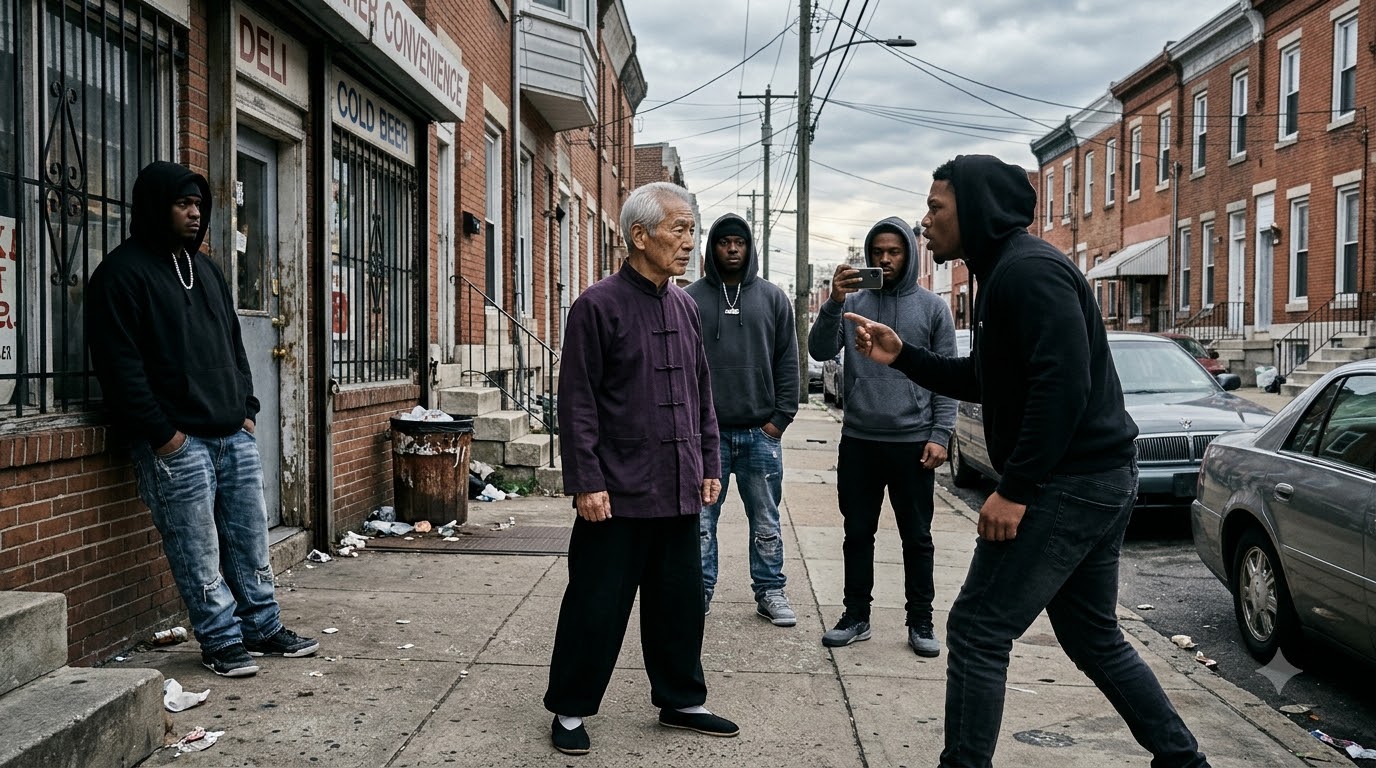
Their neighborhood was an uneven collection of brick apartments, grocery stores, boarded windows, and small businesses that had survived better years. Kenji liked the street immediately. He liked the smell of bread from the bakery and the way people greeted one another outside the corner market. But Aiko noticed three young men lounging across from his building. Vince, their loudest member, treated the block as his private territory. Dre followed him with a phone always ready to record, while Luis usually stood a few steps behind, uncomfortable with the trouble his friends enjoyed.










