The first thing Walter Mercer noticed about Denise’s diner was the silence. Not the ordinary quiet of a slow Wednesday morning, when the breakfast rush had passed and the lunch crowd had yet to arrive, but the uneasy silence of people pretending not to hear a threat. He stood just inside the door, his silver hair damp from the rain, and watched a young man in an expensive jacket lean across the counter toward the woman who owned the place.
“That’s why you never have any money,” the young man said. “You keep serving these old customers. You know why I’m here, right?”
Denise Carter held a dish towel in both hands. She was forty-eight, with tired eyes and the steady posture of someone who had spent half her life on her feet. “But it’s only Wednesday, Tyler. Rent isn’t due until Friday.”
“Your problem. I want it now.”
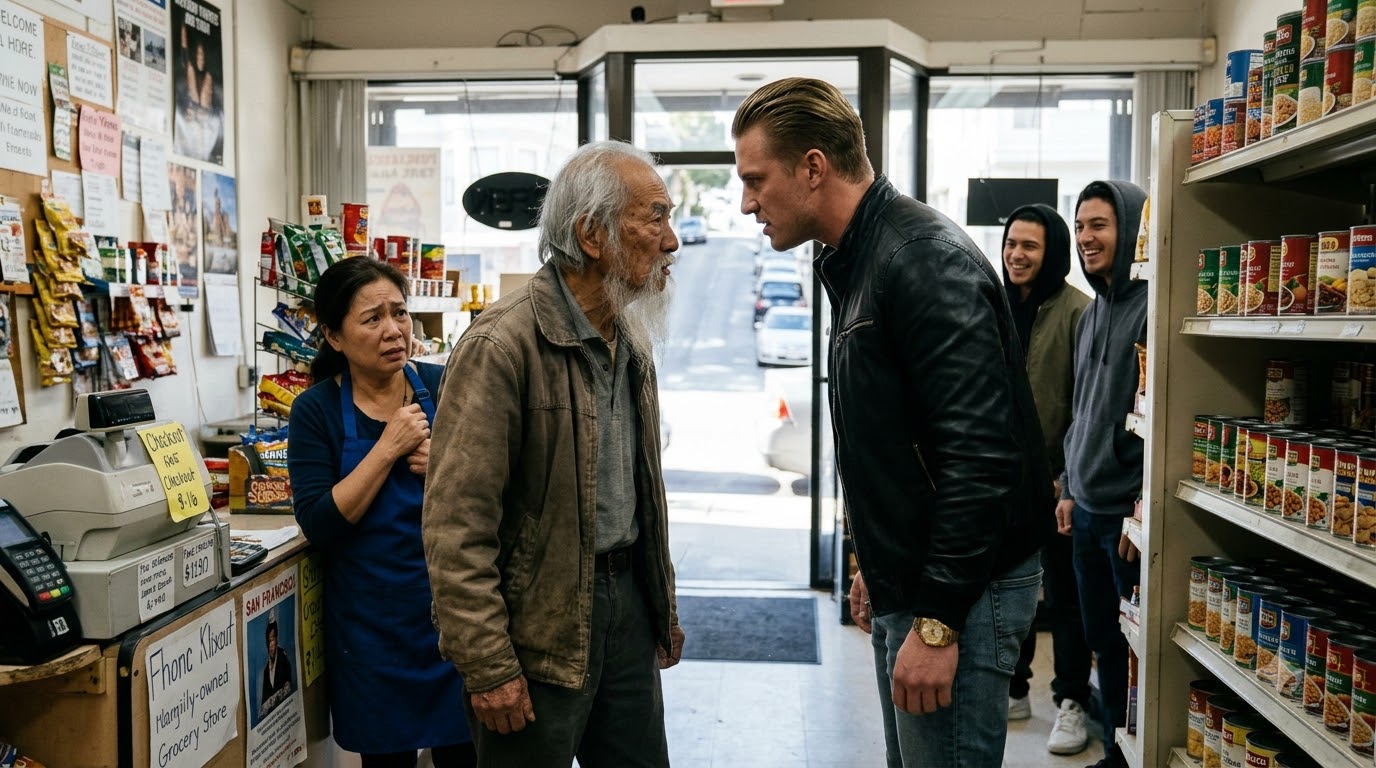
“Tyler, please.”
Walter took a seat at the counter. He had been coming to the diner for three weeks, always ordering black coffee and a turkey sandwich, always leaving an ordinary tip. Nobody there knew much about him. He preferred it that way. He had retired from a career in federal law enforcement and spent his mornings walking the city, learning which places still treated strangers like neighbors. Denise’s diner had become his favorite.
The young man was Tyler Hartway, son of developer Richard Hartway, whose company had recently purchased most of the block. Tyler had begun visiting Denise every few days, demanding payments before they were due and inventing fees that appeared nowhere in her lease. His father wanted the entire row cleared for luxury condominiums. Denise held a valid lease and refused to leave. That made her a problem the Hartways intended to solve.
“You could sell this dump and save yourself the trouble,” Tyler said. “Nobody important eats here.”
Walter looked around. A bus driver was finishing eggs at a booth. A nurse in scrubs was reading messages on her phone. An elderly couple shared pancakes beside the window. Important people, Walter thought, although Tyler would never understand why.
Denise set a cup of coffee before Walter. Tyler struck the counter with his palm, knocking it to the floor. Porcelain shattered and coffee splashed across Denise’s shoes. She flinched. Walter rose slowly.
“You can knock my coffee on the floor,” he said, “but if you touch her with one finger, I’ll break every one of yours.”
Tyler stared, then laughed. Two friends who had been waiting by the door moved closer. One was broad shouldered and wore a gold chain. The other had a shaved head and a crooked grin.
“You think we’re scared of an old man?” the broad one asked.
“Santa Claus is going to ground us,” the other said.
“What are you going to do, old man? Fight us?” Tyler asked. “Careful who you mess with. Nobody gets in the Hartway family’s way.”
Walter did not raise his voice. “Pick up your friends and leave.”
A man in a dark coat appeared in the doorway. He had been standing beneath the awning, watching the exchange. “Any problem here, gentlemen?” he asked. His name was Samuel Price, and he had worked beside Walter for twenty years before both men retired. Tyler saw the man’s composed expression and the phone already in his hand. Something about the two older men made the laughter die.
“No,” Tyler said. “We were just leaving.” At the door he turned toward Denise. “This isn’t over. Tomorrow I want double, or there will be consequences.”
“You can leave it with me,” Walter replied.
After they were gone, Denise crouched to gather the broken cup. Walter knelt beside her, careful to keep her hands away from the sharp pieces. “This is all my fault,” she murmured. “I’m sorry you had to see that. I’ll give you a sandwich on the house today.”
“It’s all right,” he said. “But you need to tell me how long this has been happening.”
She resisted at first. Walter listened without interrupting while she explained the sale of the block, the pressure to surrender her lease, and the sudden demands for money. Her husband had opened the diner twenty-two years earlier. After he died, she had kept it alive through long shifts, rising costs, and the years when customers could barely afford a meal. She employed four people and quietly fed anyone who came in hungry. Closing would mean more than losing a business. It would erase the place where her family had built a life.
“I don’t want trouble,” she said.
“Trouble is already here,” Walter answered. “The question is whether you face it alone.”
Across town, Tyler entered his father’s office overlooking a construction site. Richard Hartway barely looked up from the plans spread across his desk. Every neighboring storefront was marked for demolition except Denise’s diner, a small rectangle interrupting the footprint of the proposed tower.










