The first thing May Chen noticed was silence. Not ordinary silence of a hospital after midnight, with its distant wheels and muffled conversations, but unnatural absence of noise outside emergency entrance. For three nights, young men had gathered beneath streetlight across from St. Gabriel’s Medical Center, watching doors and pretending to wait for rides. Tonight corner was empty. May had learned long ago that a quiet street could be more dangerous than a crowded one.
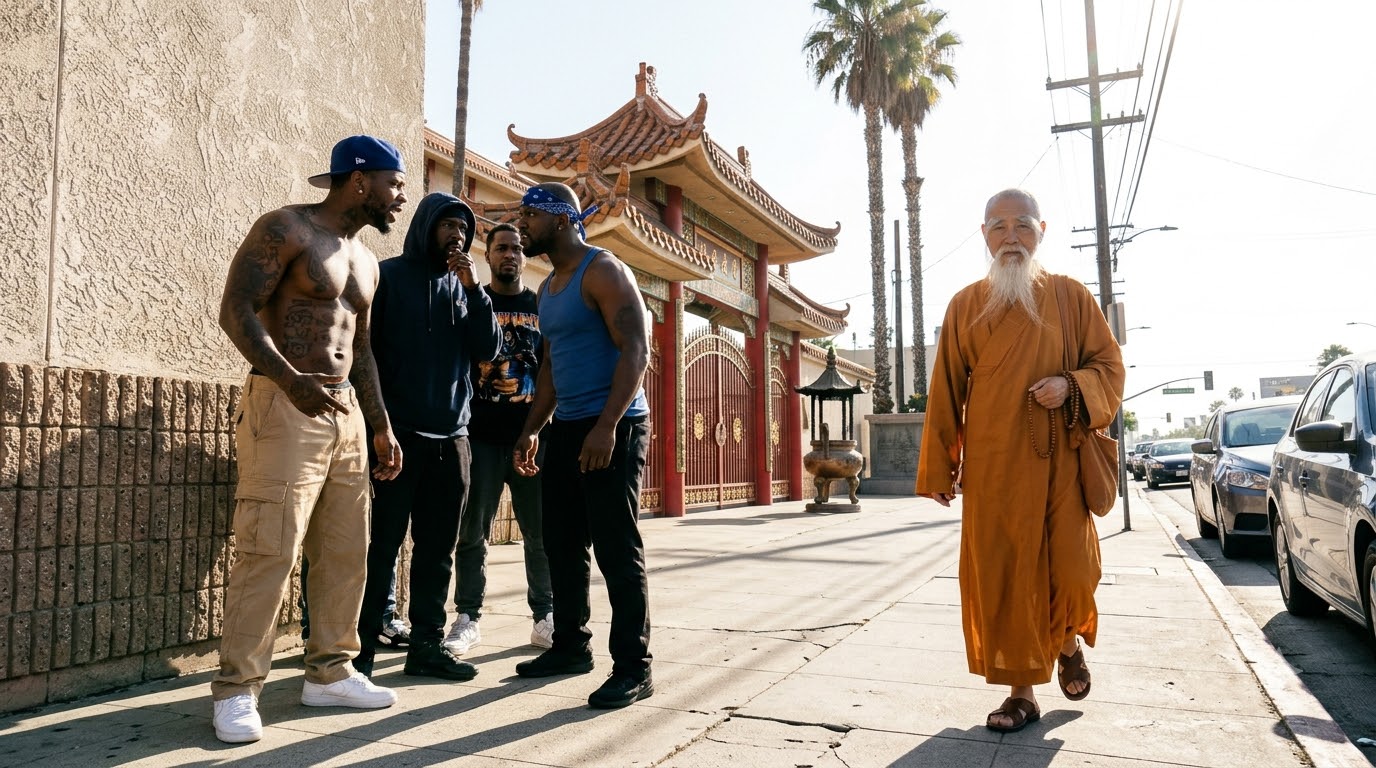
Inside room 412, her grandfather lay beneath a thin white blanket. His name was Jian Chen, a Buddhist monk whom neighborhood respectfully called Shifu, a title earned through decades of patient teaching at a temple. At seventy-four, he had survived a difficult life without losing his patience with other people. Now a ventilator assisted his breathing, and bruises darkened skin around his temples. While walking peacefully along sidewalk after his morning alms round, he had been surrounded by young men who mocked his saffron robes, shoved him, and beat him when he refused to fight back.
The attending physician had called his condition stable. May, a paramedic who had spent twelve years responding to emergencies across Los Angeles, knew how carefully doctors chose that word. Stable did not mean safe. It meant his body had stopped losing ground for moment. She stood beside his bed, holding a hand that had once taught her to fold her hands in prayer and breathrough fear. His fingers remained still.
Her mother called shortly after eleven. “He’s stable,” May said before she could ask. Her mother released a shaky breath and wanted to know whether he had moved. “Not yet. Give him time,” May answered. Then she told her that Rico, one of men arrested after assault, had been formally charged. The police believed he had helped surround Jian during his morning walk, when monk had stopped to help a frightened street vendor. They had not yet proved who ordered attack.










