Red and blue lights flashed in the rearview mirror, turning a quiet drive home into a nightmare. Officer Lawson thought smashing the phone buried the truth of his abuse. He was wrong. What the hidden lens captured that night wouldn’t just end a career, it would ignite a city. The dashboard clock glowed an eerie green.
11:42 p.m. Terrence Hayes tapped his fingers against the leather steering wheel of his newly leased sedan, keeping time with the low hum of the jazz station playing on the radio. It had been a grueling 14-hour shift at the logistics firm he managed, and all he wanted was the warmth of his own bed and the quiet comfort of his home in the suburbs. The roads were slick from an earlier drizzle, reflecting the amber glow of the streetlights in long watery streaks. Terrence wasn’t speeding. He wasn’t swerving.
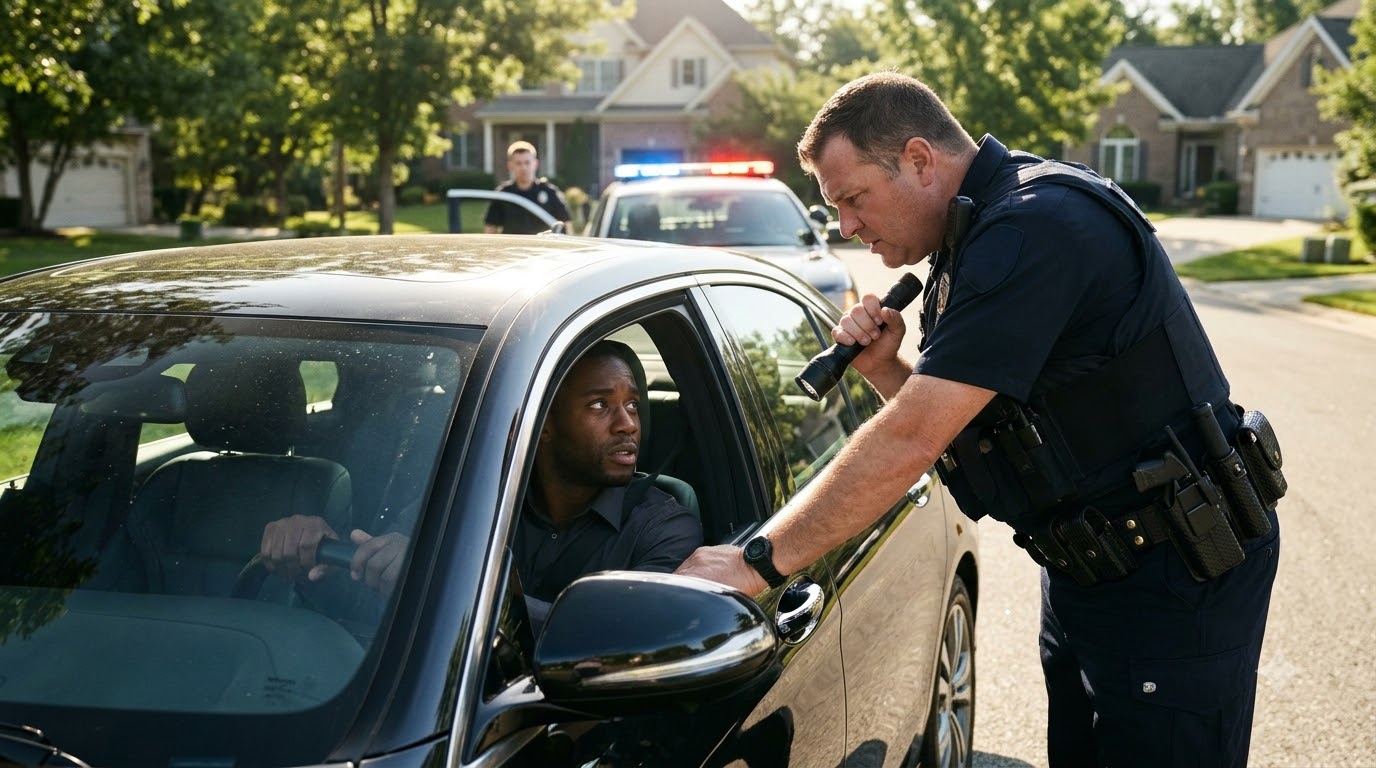
He had his hands at 10 and 2. But as he crossed the city limits into the affluent neighborhood of Oakridge, the heavy undeniable dread settled into his stomach. A patrol car had been idling in the shadows of a defunct gas station. The moment Terrence’s tail lights passed, the cruiser’s headlights flicked on. It pulled out, tailing him.
Terrence swallowed hard, his eyes darting to the rearview mirror. “Just keep driving,” he told himself. “You’re doing exactly the speed limit. Registration is up to date. Tail lights are fine.” For three agonizing blocks, the cruiser mirrored his every move.
Then the inevitable happened. The darkness of the cabin was suddenly violently illuminated by the strobe of red and blue lights. The sharp chirp of the police siren cut through the smooth jazz. Terrence sighed, his broad shoulders slumping slightly. He engaged his turn signal, pulled over to the shoulder smoothly, and shifted the car into park.










