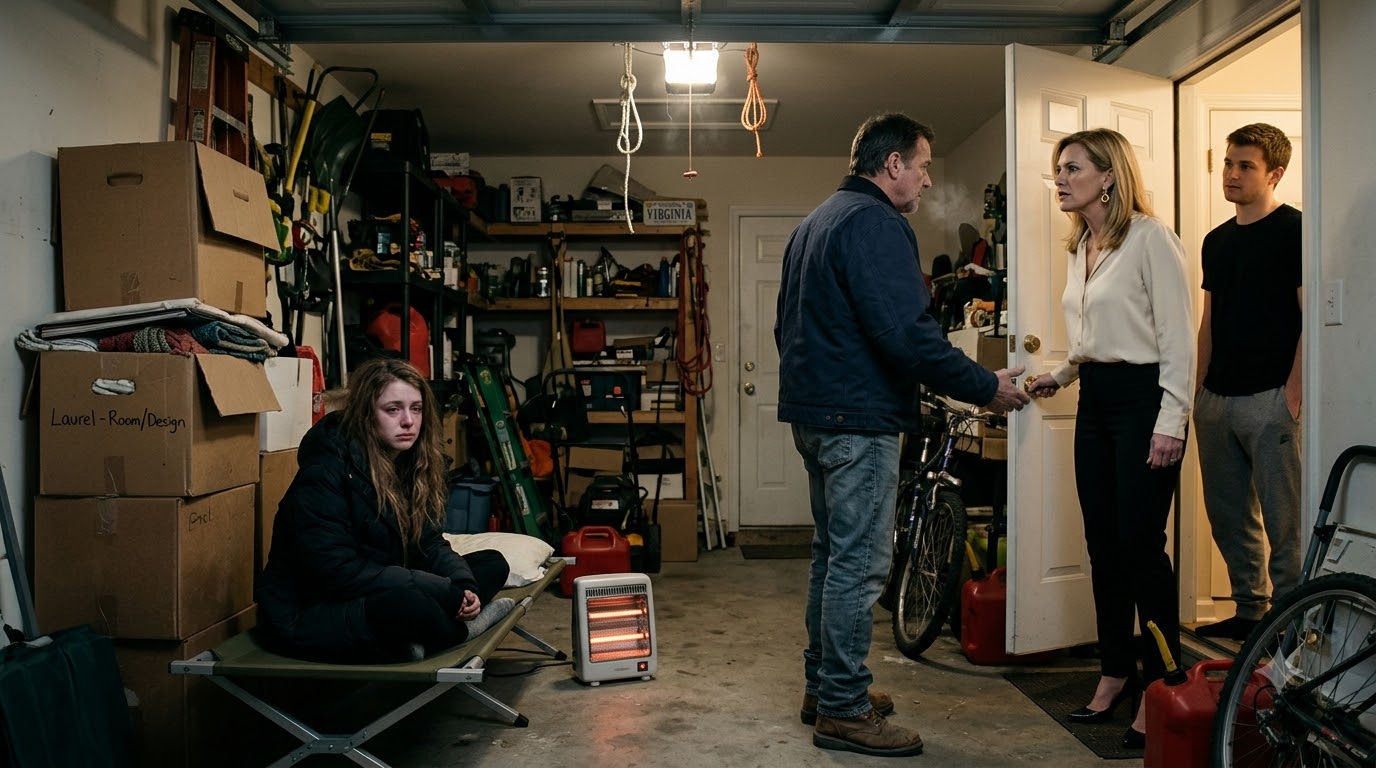
Travis is staying in that room. Laurel made her choice. My daughter is sleeping on a cot in the garage. She’s 24. Act like it.
Mom handled it. Room’s mine now. Give her the room back. Tonight. Then go find somewhere else to sleep.
She said it like it settled everything. Turned her back, and the conversation was done. I didn’t follow her. I stood in the hallway of the house I bought where my daughter had been sleeping on a cot in the garage for weeks because my wife decided she no longer deserved a real bedroom. Brenda didn’t argue.
She didn’t even look back when she said it. She just walked away completely sure I’d absorb it the same way I always had. Nothing about the way she left that room suggested she’d stopped not even once to consider whose name was actually on the deed. Was she really that certain I had nowhere left to go? The house had been mine for 17 years before Brenda ever set foot in it.
I bought it in my late 30s when my first wife Audrey was still healthy and our daughter Laurel was learning to ride a bike in the driveway. We weren’t wealthy, but we were steady. The kind of steady that comes from two people working toward the same thing for long enough that it starts to feel permanent. Then Audrey got sick and over the years that followed, everything I thought was permanent turned out to be conditional. She died on a Tuesday morning in early March 10 years ago.
Laurel was 14. I took two weeks off, handled everything that needed handling, and then one morning I walked back into the house and realized I had no idea how to raise a teenage daughter alone. I figured it out the way most people figure out the things they’re unprepared for: badly at first, and then slowly, incrementally better. I won’t pretend I always got it right, but I never stopped trying, and Laurel never stopped being the reason I had anything to come home to. By the time she was in her early 20s, she had found her direction, interior design.
She had a natural eye for it, the way she could walk into a room and immediately identify what was wrong with the light, the scale, the flow. She’d started taking on freelance clients and needed a real workspace, not just a corner of a bedroom. So, I set aside savings, took on a few extra projects, and spent 14 months converting the larger upstairs bedroom into something that could actually support her career. $23,400, new hardwood floors, updated electrical, wider windows on the east wall to bring in the morning light. I built the desk myself from a long slab of walnut, running the full length of one wall.
Laurel cried when she saw it finished. I told her it was nothing. It wasn’t nothing, and we both knew it. There was one thing I kept in that room that had nothing to do with her career. Against the far wall, I placed a small wooden dresser that had belonged to Audrey.
Inside the bottom drawer was a cedar box, letters she’d written over the years, photographs, a few small things she’d held on to, and a silver chain necklace she had set aside before she passed, with a folded note attached that said it was for Laurel. I didn’t tell Laurel it was there right away. When she found it on her own, she came downstairs and sat at the kitchen table with me for a long time without saying a word. That room, more than anywhere else in the house, was where she still felt close to her mother. I understood that without either of us ever having to name it.
I told her once, just once, without ceremony, while we were sanding the floor together late on a Saturday afternoon, that whatever changed in my life, she would always have a place in that house. She nodded and kept working. I believe she trusted me when I said it. I know I meant it. Five years after Audrey died, I met Brenda Keen at a project wrap-up dinner.
She was warm and direct, and she paid real attention when Laurel was in the room. She told me more than once that she had no interest in replacing anyone, she just wanted to build something new with someone who understood what it was like to have already lived a full life before meeting her. After nearly two years together, I believed her. I asked her to marry me. She moved in that spring, and for the first several months, things were manageable.
The adjustments were ordinary. The friction was minor. I didn’t see what was building underneath. What I didn’t know and wouldn’t fully understand until much later was that the comments had already started. Whenever I was away for work, Brenda would let things slip around Laurel.










