THE GLASS IN THE WATER
Sarah Mitchell heard glass before she saw it. From the kitchen window, the turquoise surface of the backyard pool flashed with sharp fragments as Margaret Collins emptied a heavy burlap sack. The HOA president wore pink satin pajamas, house slippers, and the gold earrings she wore to every meeting. She looked absurdly ordinary for someone committing an act so dangerous. Sarah picked up her phone and recorded through the gap beside the rear door. Margaret shook the sack again, then used its bottom to push several pieces from the deck into the water. “Let’s see them swim in that,” she muttered. Sarah stepped into the sun and demanded to know what she was doing. Margaret whirled, dropped the sack, and ordered her to stop filming. When Margaret lunged for the phone, Sarah backed away and shouted that she had captured everything. Then a man’s shadow appeared at the side gate.
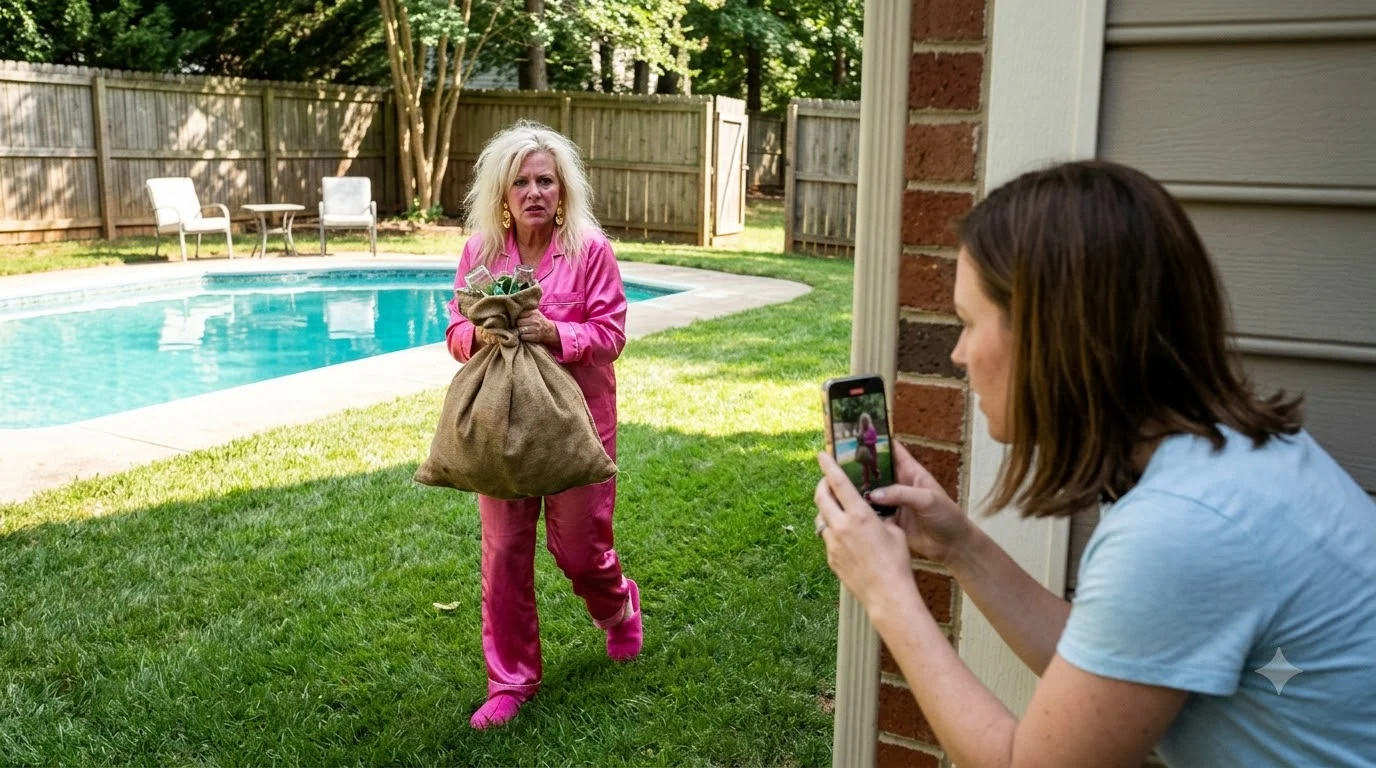
Sarah saw the water tremble where the fragments had entered, and the movement made the glass seem alive. She knew the shallow end well enough to recognize a brown shard resting near the bottom step. Her son had sat on that very step the previous evening, trailing his feet while he told her about a science project. The thought was so immediate that she nearly ran toward the pool before remembering that the deck itself was dangerous. She stopped and made herself look through the phone screen instead. If she fell or lost the recording, the children would be no safer.
Sarah had learned to separate the urgency of a feeling from the urgency of an action. Fear could make her move too quickly, while anger could make her say things she could never retrieve. She had no wish to sound composed for anyone else’s benefit. She simply wanted her next decision to be one she could explain to her children without embarrassment. That standard was harder than shouting, but it gave her a way forward.
Sarah returned to the question that had followed her since the afternoon at the pool: what did a person do when someone with apparent authority refused to respect a boundary? She could not control Margaret’s choices, and she could not make every neighbor agree with her. She could control the accuracy of her account, the safety precautions around her children, and the care with which she answered each new development. The distinction gave her something solid to stand on. It did not make the work easy. It made the work possible.
Margaret’s hand remained extended after Sarah pulled the phone away. For a heartbeat neither woman moved. Then Margaret straightened her pajama collar and adopted the formal expression she used at meetings. She said the pool was a community concern and that Sarah was interfering with official duties. Sarah answered that the gate had been latched and Margaret had no permission to enter. She wanted to ask how long the woman had been planning this, but the arrival at the gate interrupted her.
The kitchen clock kept moving through an afternoon that no longer resembled the one she had planned. There were dishes in the sink, a school form on the counter, and a grocery list held to the refrigerator with a magnet from the family’s last beach trip. Ordinary things remained stubbornly ordinary while the meaning of the day changed around them.
Emily reminded Sarah that the children would remember not only the frightening event but also the way their mother responded. They would remember whether adults listened, whether witnesses told the truth, and whether the family was allowed to keep living while the problem was resolved. Sarah could not guarantee a perfect outcome. She could show them how to ask for help and how to remain fair even when frightened. That was a kind of inheritance Michael would have understood.
Daniel Reeves, who lived three doors down, stood outside the gate with a grocery bag in one hand. He had heard shouting while unloading his car. Margaret declared the incident a private HOA matter and demanded that he leave. Sarah told him not to step inside because glass covered the deck. Daniel looked past the two women and saw a green bottle neck resting on the shallow-end step. He asked Margaret whether she had put it there. She claimed she was removing hazardous debris. Sarah held up the recording. Daniel watched a few seconds and quietly said that removing debris did not mean carrying it into a neighbor’s yard. Margaret threatened to report both of them for harassment. Daniel did not block the gate when she left, but he watched her carry the empty sack to her car and memorized the license plate.
Daniel asked Sarah whether he should stay until the officers arrived. She said yes, but asked him not to approach Margaret. He set his groceries on the ground and stepped back from the gate so nobody could accuse him of preventing her from leaving. The care he took impressed Sarah. He was angry, yet he understood that anger was not a license to escalate the confrontation.










