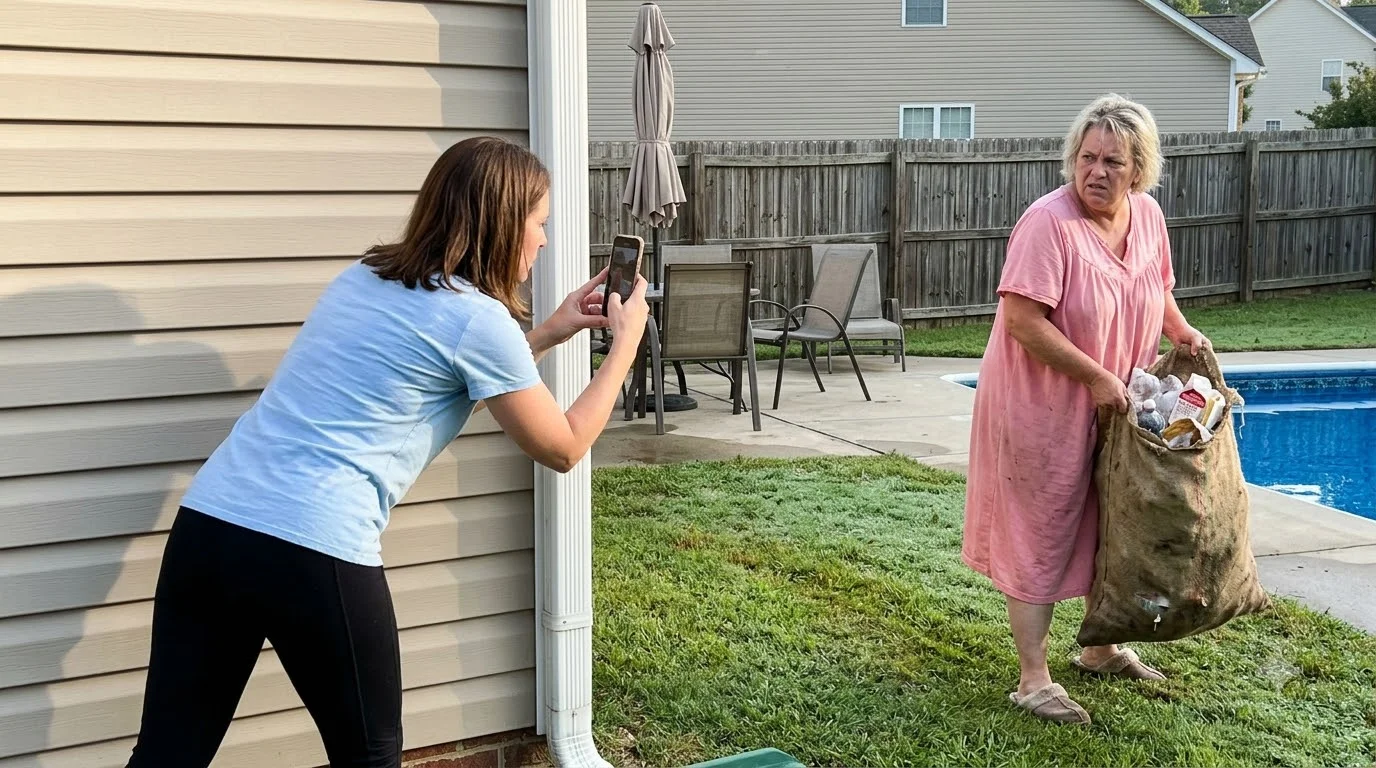
At 6:17 on a Saturday morning, fifty-six-year-old Marlene Whitcomb slipped through the side gate of the neighboring property in a pink cotton nightgown and faded house slippers. She dragged a rough burlap sack toward the swimming pool, paused beneath the kitchen window, and listened for movement inside. No lights were on. With a grim smile, she tipped the sack over the water. Rotten vegetables, greasy cartons, plastic bottles, stained paper, and loose packaging tumbled into the blue pool. A bottle struck the coping with a hollow clack. Marlene pushed the last clumps into the water with her slipper and muttered that this would teach the neighbors a lesson. She did not see thirty-five-year-old Natalie Brooks crouched behind the corner of the house, recording everything on her phone.
Natalie kept returning to the precise details that could be confirmed as the consequences of the first splash unfolded. It was easy to talk about a dispute as a single event, but real life continued around it: the blue surface of the pool, the clack of the gate latch, the shade of the wooden fence, and the smell of wet leaves near the patio were still there every day. Nobody could erase those details by winning an argument. What Natalie wanted was a record she could trust when memories blurred, and that wish was more complicated than a demand for someone else to admit defeat. At the same time, Natalie understood the difference between protecting her family and punishing a neighbor. The incident had shown how quickly ordinary irritation could become a choice that harmed another person. That realization changed the way every subsequent conversation sounded. A question about a gate or a bill was no longer just about a gate or a bill; it carried the memory of what had already happened. Yet there were still useful choices available. People could preserve evidence, answer questions carefully, and refuse to turn a disagreement into another deliberate injury. They could recognize when an apology was sincere and when it was merely an attempt to avoid responsibility. Above all, they could keep the needs of the children and the safety of the home at the center of the decisions they made.
Later, beside the neighborhood mailbox, Natalie asked Aaron whether they had done enough to keep the situation from getting worse. He looked at the uneven pavement by the curb and said he was tired of wondering what the next complaint would be. “I know,” she answered. “But I don’t want Caleb to remember us as people who spent every evening angry.” Aaron considered that before replying. “Then we keep doing what we can prove is right.” Natalie agreed, although she wished the answer were easier. They discussed the first splash without pretending they had the same feelings about every part of it. Aaron wanted immediate action; Natalie wanted a record strong enough to survive a challenge. Neither wanted to surrender the backyard they had worked to build. They ended the conversation by deciding what practical task could be completed the next morning. It was a small decision, but it helped them sleep.
Natalie kept her hands steady despite her pounding heart. She captured the gate, the sack, the pink nightgown, and the deliberate movement of Marlene emptying the garbage. When the older woman looked toward the house, Natalie lowered the phone but kept recording. She knew an angry confrontation would give Marlene a chance to change the story. Instead, she waited until the gate clicked shut. Only then did she stand and look at the mess drifting toward the shallow end. Her seven-year-old son had planned to swim that afternoon.
At dinner, Caleb asked a question about the first splash that the adults had hoped he would not need to ask. Natalie set down her fork and listened all the way to the end. She explained the difference between an accident and a choice, careful not to give him details that would frighten him further. “Does it mean we have to move?” he asked. “No,” Aaron said. “This is our home, and we’re working to keep it safe.” Caleb studied the stack of meeting notices through the window. “I just want people to be nice,” he said. Natalie wished she could promise that everyone would be. Instead she told him that he could always come to them when something felt wrong. He nodded, and the conversation moved slowly toward school and the friends he hoped to invite over.
Natalie and her husband, Aaron, had bought the modest house in Willow Creek, North Carolina, three years earlier. Aaron was a firefighter whose shifts were long and unpredictable; Natalie worked as a physical therapist at a rehabilitation clinic. They had saved carefully to renovate the backyard, replacing a cracked concrete slab with a small pool, a shaded patio, and a safety fence. Their son, Caleb, learned to float there, first gripping his father’s hands and then letting go for a few brave seconds. The water was not a luxury in their eyes. It was the place where the family spent evenings together when their schedules finally aligned.










