The Morning I Was Arrested at My Own Home, I Was Wearing Gardening Gloves, Covered in Dirt, and Grieving in the Quiet Way People Often Mistake for Weakness — Until One Officer Turned That Silence into an Excuse for Force, a False Report, and Charges That Should Never Have Existed.
I said almost nothing at the station, because I knew one thing he didn’t: by the time he repeated that lie in court, the woman he humiliated would be the one holding the law over him.
My name is Judge Evelyn Mercer, and the day I was arrested in my own garden, I learned exactly how dangerous arrogance becomes when it puts on a badge.
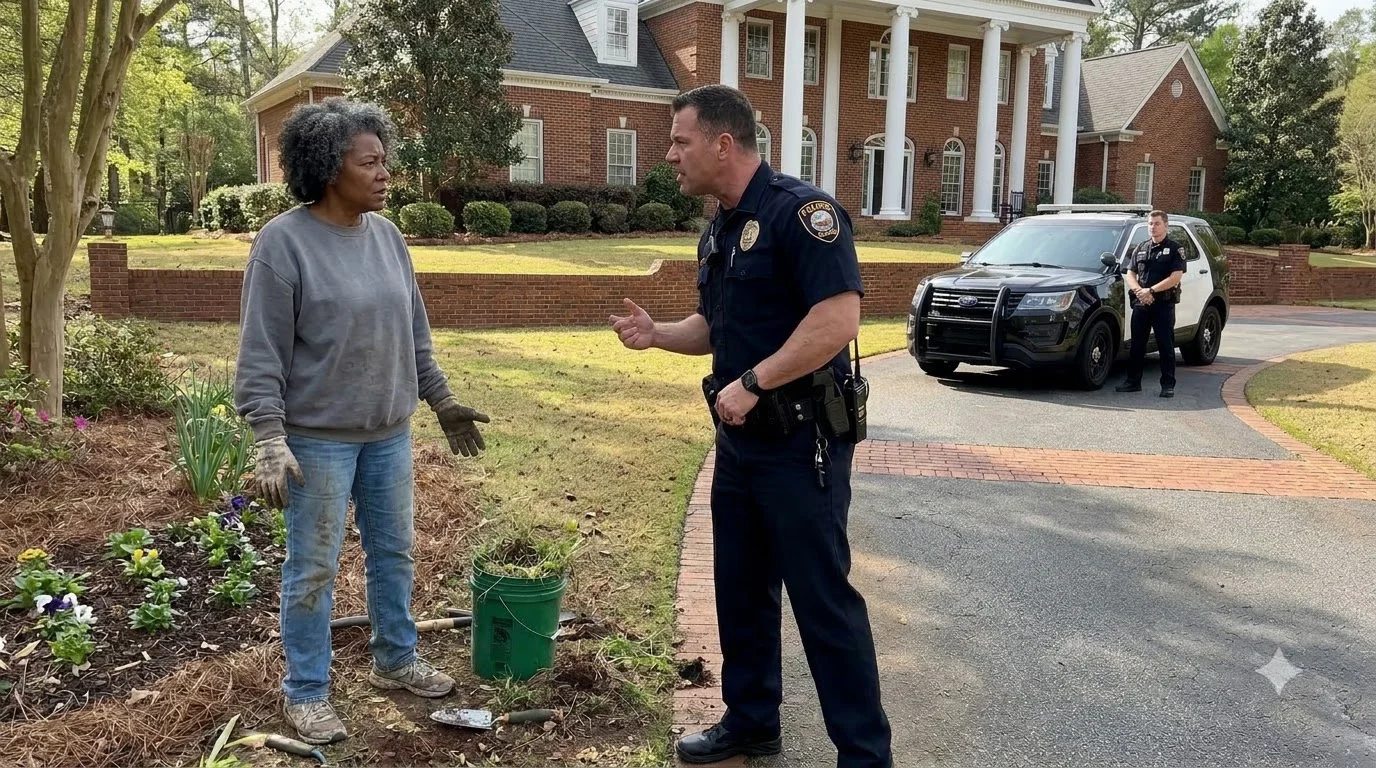
I was fifty-eight years old, a sitting federal judge, and on that Saturday morning I was wearing faded jeans, gardening gloves, and an old gray sweatshirt with soil on the sleeves.
My husband had passed away years earlier, and tending the garden behind my home in Rosehaven Park had become one of the few rituals that still quieted my mind.
The property sat inside a gated neighborhood where every lawn looked curated and every brick path seemed designed to signal respectability.
Apparently, respectability has a dress code.
I was kneeling near the front flowerbeds, pulling weeds that had pushed through the mulch after three days of rain, when I heard tires on the gravel drive.
Two patrol officers stepped out of their cruiser and came toward me with the stiff, performative urgency officers use when they want an audience to notice their authority.
The older one introduced himself as Officer Cole Barrett.
The younger one, clearly a rookie, was Officer Ethan Pike.
Barrett did most of the talking.
Pike mostly watched.
“We got a report of a suspicious person on the property,” Barrett said.
I looked up from the flowerbed, confused at first, then almost amused.
“Officer, this is my property.”
He glanced at my clothes, my gloves, the dirt on my knees, and decided that what I said could not possibly be true.
“Sure it is,” he replied. “Then why don’t you tell me who owns the house?”
“I do,” I said evenly. “My name is Evelyn Mercer.”
He smirked, the kind of smirk men wear when they believe disbelief itself is evidence.
“That’s convenient.”
I stood slowly, keeping my hands visible.
I explained that my identification was inside, ten feet away through the side door, and that he was welcome to accompany me while I retrieved it.
I even suggested he call dispatch to verify the address through property records.
Any sensible officer would have done one of those things in under a minute.
Barrett did neither.
Instead, he told me to put my hands behind my back.
I asked, calmly, “On what basis?”
That was apparently enough to offend him.
He stepped forward, grabbed my arm, spun me toward the brick wall bordering the side patio, and slammed my face against it so hard I tasted blood where my lip split against my teeth.
I remember the scrape of brick against my cheek, the cold shock of metal on my wrists, and the absolute disbelief pulsing through me more sharply than pain.
I kept telling him he was making a mistake.
I kept asking him to let me identify myself.
He refused.
Pike shifted once, as if he wanted to speak, but said nothing.
By the time they shoved me into the back of the cruiser, my wrists were swelling and my garden gloves were lying in the dirt beside a half-filled bucket of weeds.
I was arrested for trespassing and assault on an officer — an allegation so absurd I nearly laughed when Barrett said it.
But I did not laugh.
Because the moment I saw the satisfaction on his face, I understood something chilling: this was not confusion.
This was choice.
And by the time Officer Cole Barrett repeated that lie under oath, he would have no idea that the woman he handcuffed in gardening clothes had decided not to stop him — because I intended to let his own false story carry him straight into federal court.
At the station, I gave them nothing except my name and one clear request: counsel.
That frustrated Officer Barrett more than shouting ever would have.
Men like him know how to handle anger.
They know how to provoke panic, how to twist fear into “resistance,” how to convert confusion into probable cause.
Silence unsettles them because silence does not help them build the story they want.
I sat on the bench in holding with dried blood at the corner of my mouth, bruises deepening beneath the cuffs’ marks, and watched him pace in and out of the report room through the narrow glass panel.
He was writing fast.
That alone told me he had already moved from force to fabrication.










