“This is fake. Nobody’s buying this.”
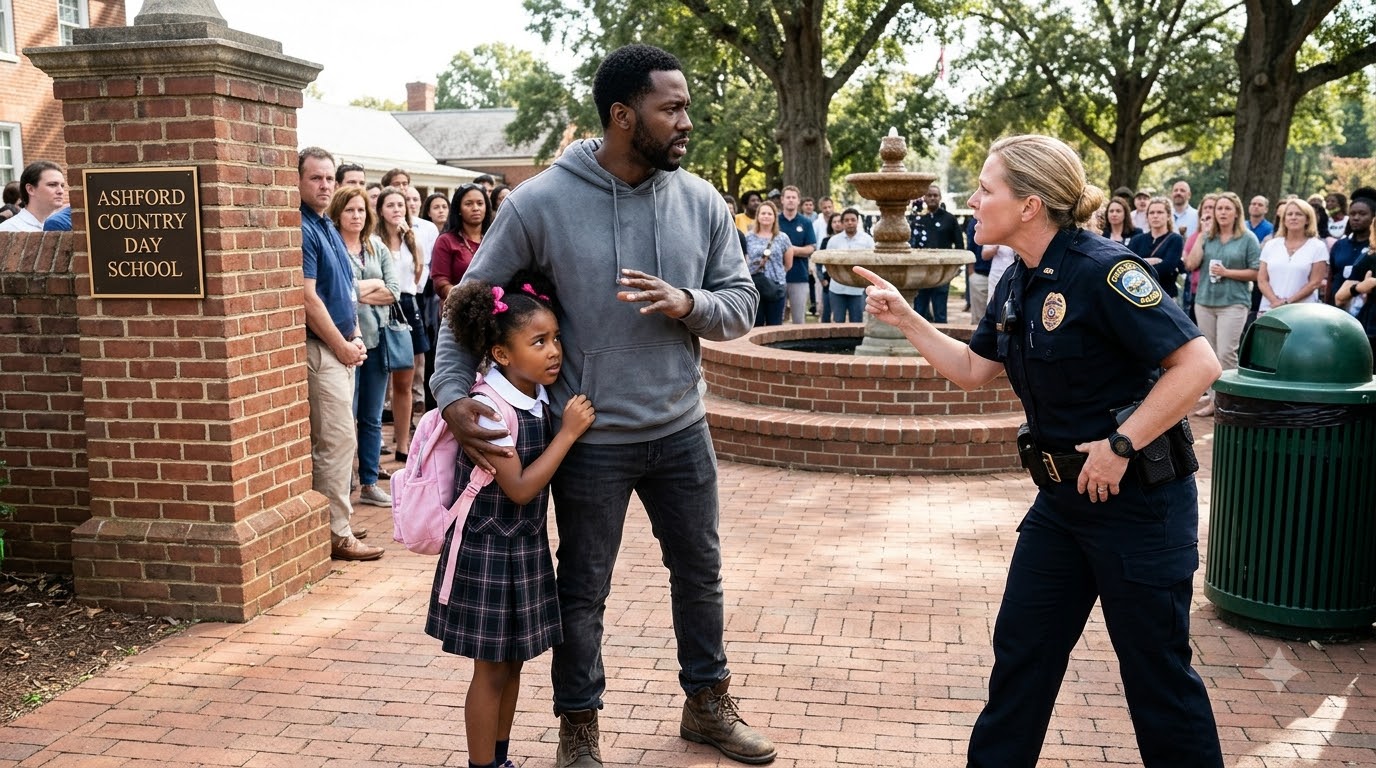
Officer Diane Kessler held a gold federal badge above her head as forty parents watched from the courtyard of Ashford Country Day School. The man standing before her wore an old gray hoodie, dark jeans, and boots repaired more than once. He held a juice box and a small pink backpack. His nine-year-old daughter stood ten feet away, trembling. He had asked Kessler to verify the credential. Instead, she laughed, dropped it into a trash can filled with napkins and apple cores, and reached for her handcuffs.
“Run the number,” the man said quietly. “Ninety seconds. That’s all it takes.”
Kessler ignored him. Within minutes, a radio message would expose her mistake, and the officer who had humiliated a father before his daughter would beg him to protect her career. But the story began long before that Thursday afternoon, with a promise made in a hospital room.
Marcus Bell was thirty-eight, a broad-shouldered Black father with a neatly trimmed beard and a calm expression that concealed fifteen years of dangerous work. He lived with his daughter, Zoe, in Ashford County, Virginia, a wealthy suburb of immaculate lawns, matching mailboxes, and families who noticed anyone who looked different. Their house was modest, their pickup older than most vehicles outside the private school, and their mornings filled with ordinary arguments about lunch.
“Daddy, you cut it wrong again,” Zoe complained as Marcus removed the crust from her peanut butter sandwich.
“Triangles are better,” he insisted.
“Squares hold more. That’s my science.”
He laughed, tucked the sandwich into her lunchbox, and glanced at the photograph on the kitchen windowsill. His late wife, Camille, smiled from the frame while holding their newborn daughter. Camille had died three years earlier after an eighteen-month illness. During her final night, she had made Marcus promise that Zoe would always know she was loved and would never be made to feel small. He carried their wedding rings together on a chain beneath his shirt, touching them whenever life became difficult.










