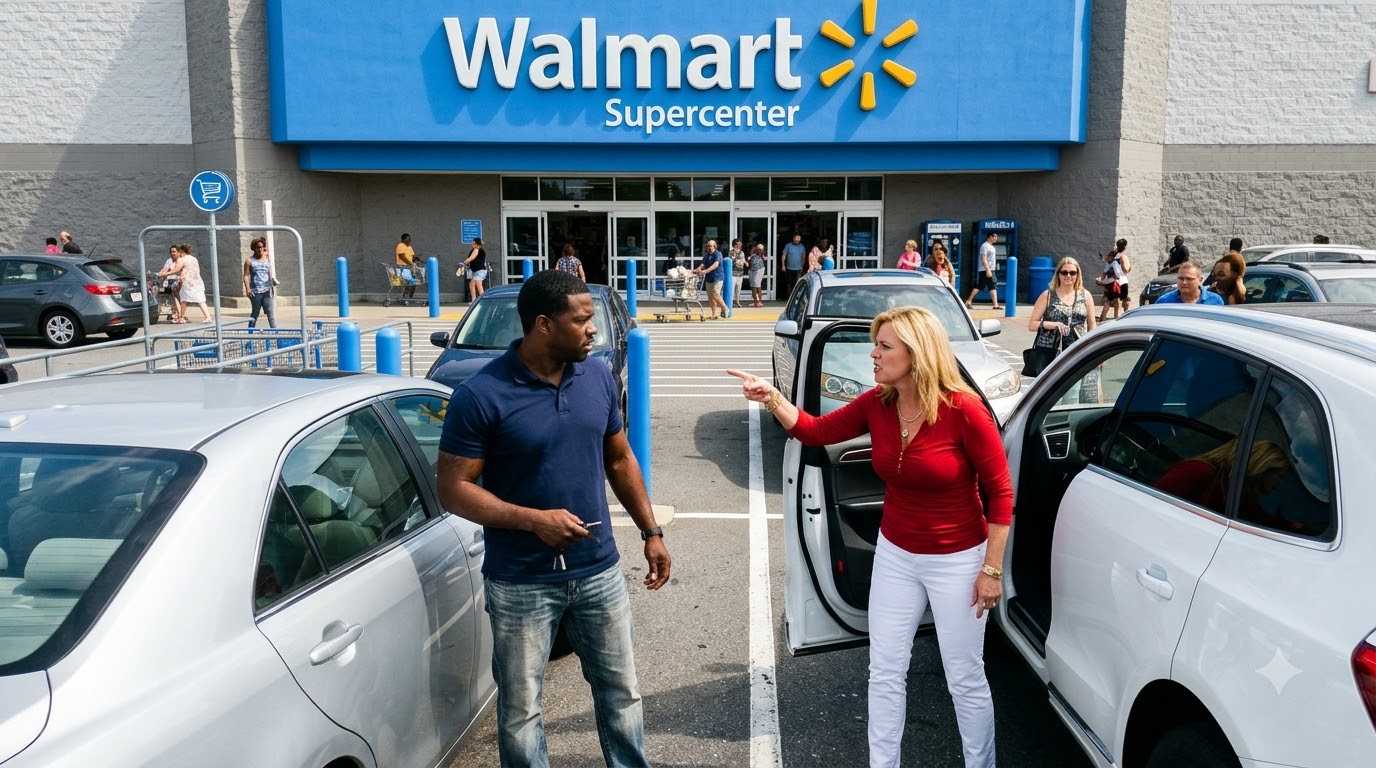
Michael warned her to walk away. He was trying to keep distance between them when her hand suddenly struck his face. The slap snapped his head sideways and drew startled gasps from nearby shoppers. For a second he stood frozen, shocked by the audacity of an attack in broad daylight. Then, acting before he could reconsider, he slapped her back. His response was restrained, but it was still a physical response, and he immediately understood how easily she could exploit it.
Karen staggered backward, touched her cheek, and began screaming. She called him an animal, claimed he had assaulted her, and demanded that the gathering crowd take her side. Michael said she had struck first. She talked over him, shouting that he would pay and that she could ruin his life. Several people raised their phones. Their cameras made Michael acutely aware that a few seconds of footage, without the beginning, could tell a dangerously misleading story.
The shoppers who had gathered near the first confrontation were not a single audience with a single opinion. Some appeared alarmed, others curious, and a few looked away as soon as the exchange became uncomfortable. Michael noticed those reactions because he was searching for one face willing to acknowledge that Karen had crossed a line. A simple statement that she had shoved him would have mattered. Instead, the silence allowed her voice to dominate. By the time he reached the store doors, she was already telling a version of events in which his attempt to protect himself had become the beginning of the story.
He refused to continue. His cheek burning, he walked through the automatic doors and left Karen shouting behind him. Inside, the air conditioning and ordinary sounds of shopping felt unreal. He pushed a cart through the aisles, trying to remember what he needed. Bread. Milk. Eggs. Simple things. Yet every movement brought back the shove, the racial insults, and the sound of her palm against his face.










