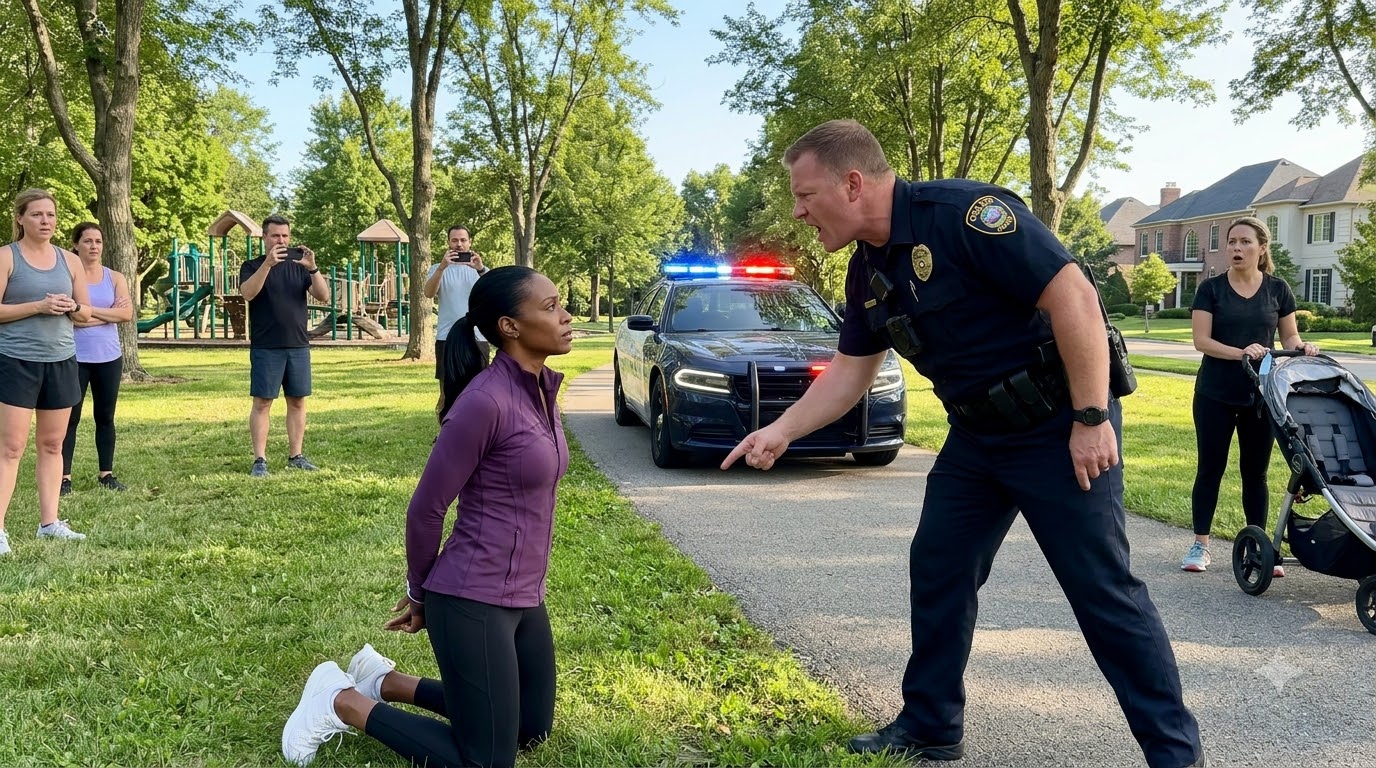
I said get on your knees now. I’m not doing anything wrong. Officer, don’t you dare talk back to me. The confrontation explodes in seconds. Officer Bradley Matthews, a white cop with 12 years on the force, towers over a black woman in expensive running gear at Riverside Park.
His hand rests on his weapon while she stands her ground, calm but defiant. You think because you live in this fancy neighborhood, you can disrespect the police? I live here. I have every right to be here. We’ll see about that. on your knees, hands behind your head.” She slowly complies, kneeling on the grass as shocked families watch.
Children stop playing. Joggers freeze midstride. Phone cameras start recording what looks like another case of police targeting a black woman for simply existing in an affluent area. But something in her eyes suggests this isn’t what it appears to be. While Matthew savors his moment of power, the woman’s expression holds a secret that will soon turn this entire situation upside down.
3 months earlier, FBI director Camille Washington sat in her secure conference room studying a thick file marked operation clean sweep officer Bradley Matthews. Photographs, financial records, and witness statements cover the table like pieces of a complex puzzle. Matthews thinks he’s untouchable, Camille tells her investigation team. Drug money, evidence tampering, witness intimidation, but he has one critical weakness. His ego makes him predictable.
Deputy Director Carter leans forward, concern etched on her face. Director, this is unprecedented. You’re talking about putting yourself directly in harm’s way. Camille’s response is measured but firm. Men like Matthews only see what they expect to see.
A black woman in their territory becomes an automatic target. The evidence board reveals the scope of Matthews corruption. 17 excessive force complaints, all involving people of color. Photos show him collecting envelopes of cash from known drug dealers. Bank records trace luxury purchases far beyond a police salary.
But every previous investigation has been blocked by a network of corrupt officials protecting him. He has a pattern, FBI analyst Sarah Kim explains, pointing to a map dotted with red pins. Morning joggers in affluent neighborhoods, black women especially. He uses suspicious person calls to justify harassment, then escalates until he can make arrests. Camille studies the psychological profile.
Classic authoritarian personality with racial bias. He needs to feel superior to put people in their place. That compulsion will be his downfall. The plan is audacious in its simplicity. Camille will move into Matthew’s patrol area, establish a jogging routine, and wait for him to target her.
Hidden surveillance teams will document everything while she gathers evidence of his criminal enterprise from the inside. The risk is enormous, Carter warns. If he discovers your identity before we have enough evidence, he won’t. Camille interrupts. Racism makes people blind to possibilities outside their prejudices.
Meanwhile, across town, officer Bradley Matthews collects his weekly $5,000 payment from drug dealer Rico Vega. What Matthews doesn’t know is that Vega has been a DEA informant for 6 months, recording every transaction. “Keep my corners clean, I keep the feds off your back,” Matthews says, pocketing the cash. His partner, Officer Tony Duca, stands watch while they conduct business in broad daylight. Matthew’s arrogance extends beyond simple corruption.
He’s built a network of dirty cops, crooked lawyers, and complicit supervisors who ensure his crimes never see courtrooms. To him, the badge isn’t about serving and protecting. It’s a license to take whatever he wants from people he considers beneath him. The FBI thinks they’re so smart. Matthews brags to Duca later.
They’ll never touch us. We own this neighborhood. We own the judges. We own the system, but the system Matthews thinks he controls is already closing in around him. Federal surveillance teams photograph every meeting, record every conversation, track every dollar.
What feels like absolute power to Matthews is actually a carefully monitored cage, and he’s about to walk directly into the trap Camille has set. The final piece falls into place when Camille moves into the luxury condo overlooking Matthew’s patrol route. Hidden cameras and recording equipment turn her new home into a command center. Backup teams position themselves in unmarked vehicles throughout the neighborhood. As Kamya laces up her running shoes for the first time in enemy territory, she reviews the operation one final time.
Every detail has been planned, every contingency prepared for. Matthews has spent 12 years believing he’s untouchable. In 48 hours, that illusion will be shattered forever. The morning of the operation arrives with perfect weather, clear skies, and light traffic that will ensure maximum visibility for what’s about to unfold. In her condo overlooking Riverside Park, Director Camille Washington receives final briefing updates through her encrypted earpiece while putting on her running gear.
All surveillance teams in position, Agent Miller reports from his concealed location. Body cameras active, backup unit staged, media monitoring systems online. Director, are you absolutely sure about this approach? Camille adjusts her hidden recording device, perfectly disguised as a premium fitness tracker that any affluent jogger might wear. Matthews has destroyed 47 innocent lives over 8 years.










