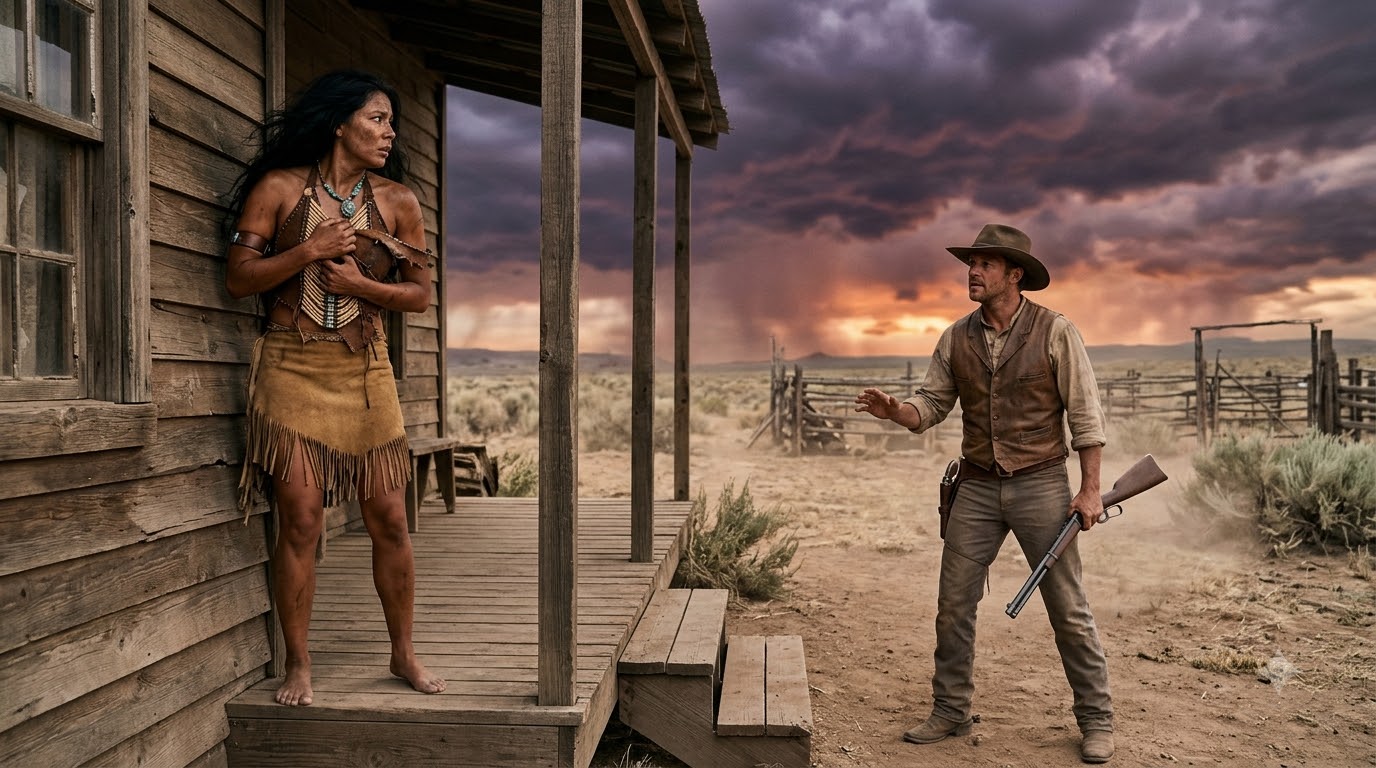
Her steps were uneven, but her dark eyes burned with fierce alertness. Reed set down the water bucket he had been pulling up and stood still on the porch. The woman stopped about 30 ft away, pushed her daughter behind her, then spoke in a hoarse voice drained by exhaustion, “We have nowhere else to go. I can do anything. haul water, cook, tend livestock, clear land. I just ask you to let us stay for the night, even just under the porch.
Reed stared at them for a long moment without saying a word. The old dog growled softly, then fell silent. A gust of wind swept red dust across the field, rattling the weathered wooden fence. He remembered the girl eating cornbread days ago, her cracked lips, that awkward little nod. Now she stood behind her mother, gripping the hem of a torn shirt, her eyes still full of fear, but this time with a flicker of hope.
Reed sighed. He was not a kind man, nor someone who liked to get involved in other people’s troubles. But in that moment, the emptiness of his cabin echoed with a familiar voice. Do not turn your back on those in need. It was something his wife used to say many years ago back when she was still alive.
He nodded and slowly opened the gate. come in. Without another word, Reed turned and walked into the kitchen, stirring the fire back to life. When the mother and daughter stepped inside, he pulled out an old wooden chair and set the last loaf of cornbread and a pot of beans on the table. Then he glanced toward the corner of the room where a thick blanket was folded. Sleep there, Reed said plainly.
Awanata bowed her head, her voice trembling. Thank you, sir. Tiva sat down right away, clutching the warm bowl of beans, her tense face slowly beginning to relax. Reed sat across the room, eyes on the fire, asking no questions. He understood that sometimes silence is the kindest thing you can offer.










