His aunt’s neighbor Daniel stopped by, shook his hand, and spoke so quickly that Kenji needed a moment to follow. Daniel asked whether he had decided what to do next. The enlistment packet still lay unopened on the kitchen counter, even though Kenji had read every page twice. His father believed that service might help him find direction, but Kenji had never been certain whether the ambition was his own. He told Daniel he was still figuring things out. Daniel nodded as if uncertainty were perfectly ordinary.
A few days later Kenji met Sophia at a coffee shop. She had an easy smile and a habit of asking questions that could not be answered with polite phrases. When he ordered black coffee, she teased him for behaving as if the meeting were a job interview. He said he wasn’t serious, and she replied that he looked as though he were waiting for medical test results. His unexpected joke made her laugh. It was the first time since leaving Japan that he stopped thinking about how other people saw him.
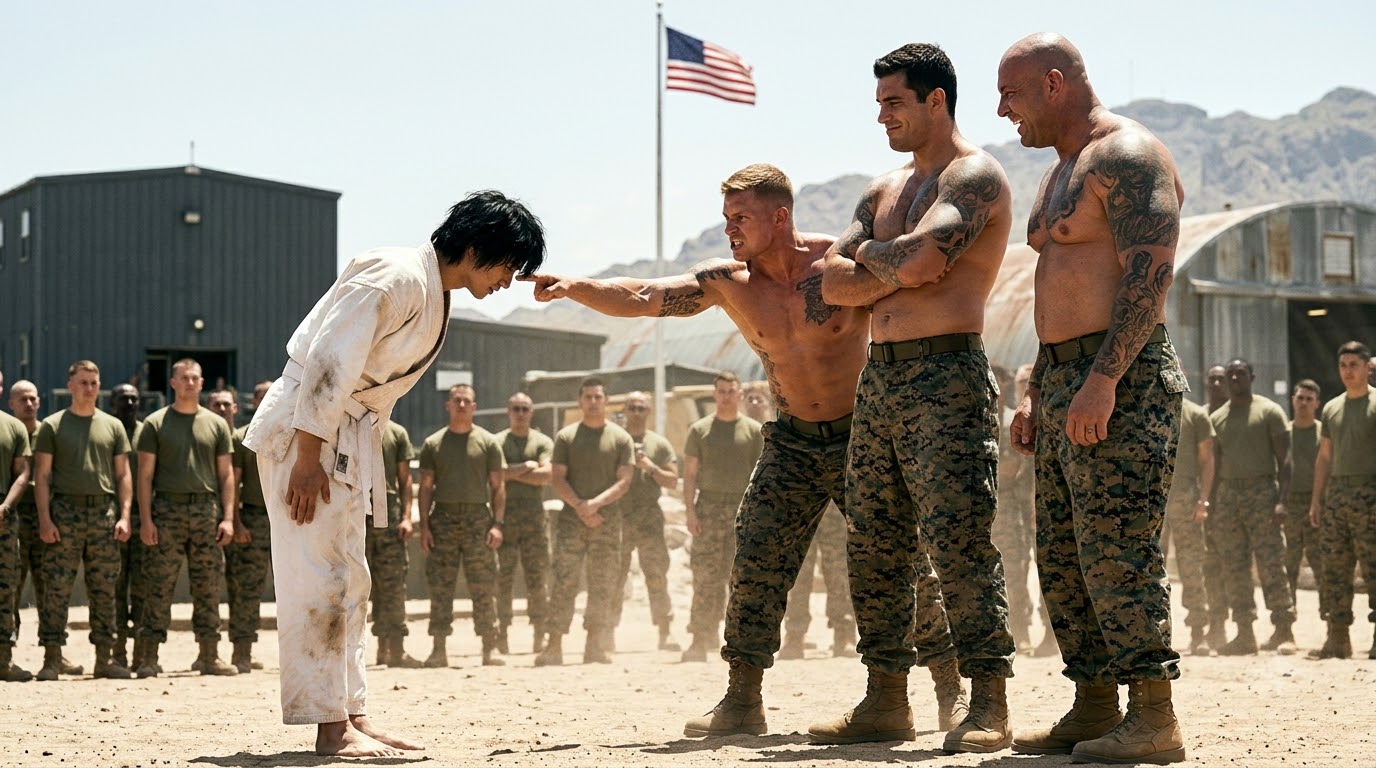
Sophia wanted to study physical therapy. She talked about patients who had been told their recovery would never be complete and how extraordinary it felt to help someone walk again. When she asked whether he wanted to join the Army or merely wanted to satisfy his father, Kenji hesitated. “I want to stop feeling like everybody already knows who I’m supposed to be except me,” he finally admitted. Sophia did not offer an easy solution. “Call me when it gets loud,” she said. “I won’t fix it. I’ll listen.” He remembered that promise long afterward.
His aunt fed him before he left for training and pressed another parcel of food into his hands. She insisted he eat, warning that instructors would somehow manage to starve him and then blame him for being hungry. Sophia returned his forgotten coffee as he climbed into the car. “You’d better come back for it,” she said. He promised he would. At that moment, he imagined the hardest part of training would be the physical work.










