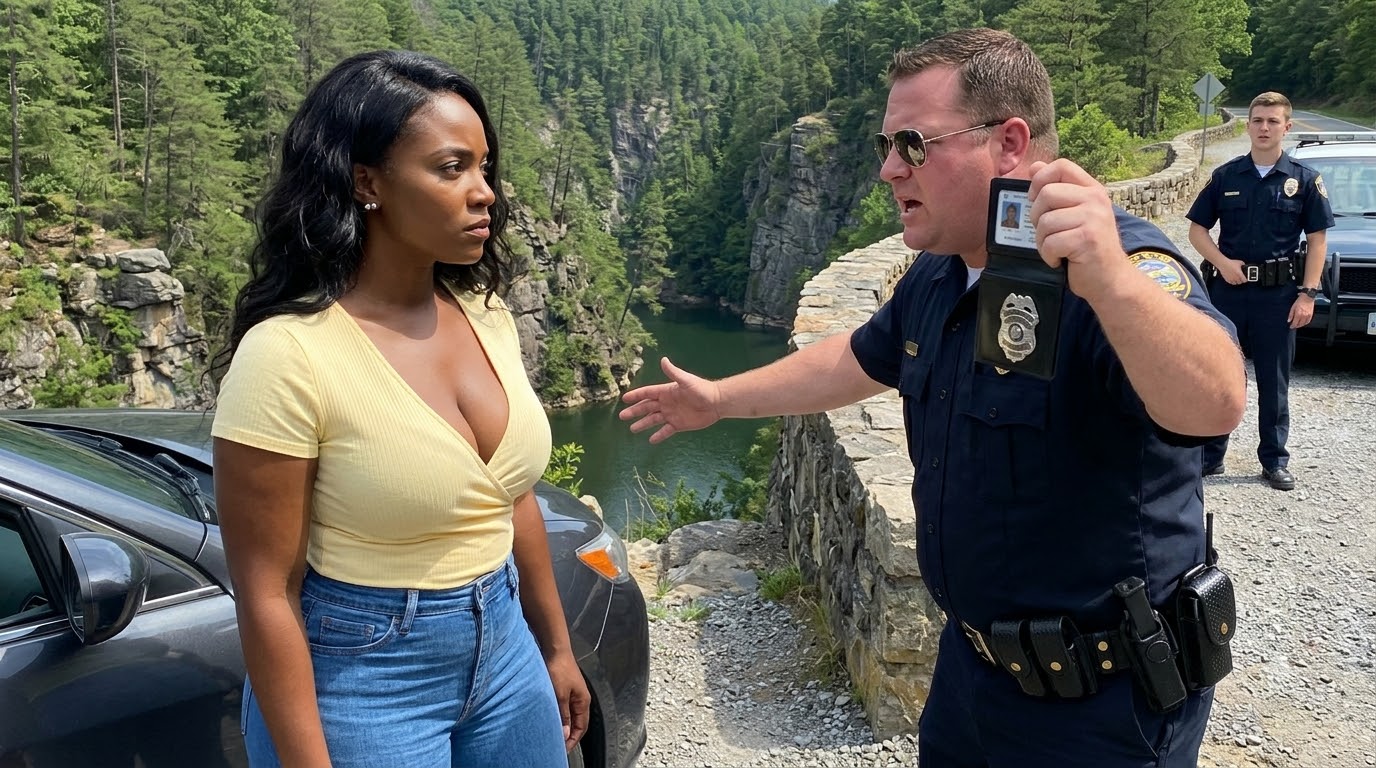
I pointed toward the doorway. There were several young people there. Did Officer Harlan ask you to identify one? No, he said he’d handle it. Her complaint explained why he had approached the entrance.
It did not establish that Amara had done anything wrong. Mara’s interview supplied another distinction. She had seen Amara lift the invitation, but had been diverted by a failed microphone before she could reach her. I should have gone straight over, she said. What did you hear before that?
Amara asking him to check. Did you hear his response? Not clearly. Calder recorded the limit along with the observation. The woman who had returned Amara’s phone gave a separate account of Harlan’s remark about black girls.
She repeated the words reluctantly, looking down at her clasped hands. Why didn’t you intervene? Calder asked. I thought there must be something I hadn’t seen. What changed?
She was on the floor asking him to stop. I couldn’t keep telling myself that. She signed her statement before leaving. At the department, Shaw was completing her own report when Harlan stopped beside her desk. His event assignment had been suspended pending review, but he had come in for paperwork.
You should mention she was combative, he said. Shaw kept her hands beside the keyboard. I arrived after the contact. You heard how she was talking. I heard her say she hadn’t struck you.
He lowered his voice. You know what this looks like? New chief, his daughter, everyone trying to please him. Shaw looked toward the report on her screen. I’ll write what I saw.
I’m asking for context. You’re asking me to describe something I didn’t witness. He left without answering. Shaw documented the exchange and sent it to Calder through the assigned supervisor. Amara learned about that request only when Calder asked a follow-up question several days later.